EXIF Forensics: Solving Crimes Through Photo Metadata
Every photograph tells a story beyond what meets the eye. For investigators, journalists, and forensic experts, that story often contains crucial clues. These clues are hidden in plain sight within the EXIF data. This metadata, automatically embedded by cameras and smartphones, can reveal where a photo was taken, when it was captured, and even what device was used.
But how can this digital footprint help solve a crime? EXIF analysis can track suspects' movements and verify alibis—making it an indispensable tool in modern criminal investigations. This article explores how seemingly harmless data can become critical evidence in real-world cases, from identifying crime scenes to confirming photo authenticity in legal proceedings.
Grasping this data forms the foundation of any digital investigation, and having a secure tool to analyze it is crucial. At EXIFData.org, you can safely analyze photo metadata directly in your browser without ever uploading your sensitive files. To begin your own analysis, you can check your photo on our homepage.

What is Photo Metadata Forensics?
Photo metadata forensics is the science of extracting, analyzing, and interpreting the data embedded within an image file for legal or investigative purposes. This field treats every photo as a potential source of digital evidence, capable of telling a story that goes far beyond what is visually depicted.
This discipline has grown in importance as digital cameras and smartphones have become ubiquitous. Every picture now contains a wealth of hidden information within its metadata. By examining this data, investigators can establish timelines, verify locations, and uncover evidence of tampering that might otherwise go unnoticed. It’s a crucial skill for anyone working in law enforcement, private investigation, or journalism.
Understanding the Digital Footprint Left by Cameras and Smartphones
When you take a picture with a digital device, something important happens. The device captures the image, yes. But it also records a detailed log of information about how and when the photo was taken. This log is known as EXIF (Exchangeable Image File Format) data, and it creates a unique digital footprint for every image.
This footprint includes details like the camera model, lens type, shutter speed, aperture, and ISO settings. More importantly for forensic work, it often contains the exact date and time the photo was taken and, if GPS is enabled, the precise geographic coordinates of the location. This information is a direct link between the digital file and the physical world.

Key EXIF Data Points Used in Digital Investigations
In a digital investigation, not all metadata is equally important. Investigators focus on specific data points that can provide actionable intelligence or be used as evidence. These key points include:
- GPS Coordinates: The most powerful piece of forensic data. It can pinpoint the exact location where a photo was taken, helping to place a suspect at a crime scene or verify a witness's account.
- Date and Time Stamps: The
DateTimeOriginaltag shows the exact moment a photo was captured. This can be used to build a timeline of events, confirm or dispute an alibi, and correlate a photo with other evidence. - Device Information: The
MakeandModeltags identify the camera or smartphone used. This can help link a photo to a specific device owned by a suspect. - Software and Modification Data: Tags like
SoftwareandModifyDatecan indicate if a photo has been edited. A discrepancy between the creation date and modification date is a red flag for potential tampering.
The Evolution of Metadata in Forensic Photography
Forensic photography has existed for over a century, but the rise of digital technology has transformed it completely. In the past, investigators relied on film negatives and manual logs. Today, photo metadata provides a built-in, automated record that is much harder to falsify convincingly.
Technology has evolved, and so have manipulation techniques. Early digital cameras had simple metadata. Modern smartphones, however, embed vast amounts of information—including sensor data and complex processing logs. Forensic experts must constantly adapt their techniques to stay ahead, learning to identify the subtle inconsistencies that reveal digital forgery. This makes a comprehensive analysis tool more critical than ever. You can start your analysis with our up-to-date viewer.
Real-World Cases Where EXIF Data Made the Difference
The theoretical value of EXIF data is clear, but its real power is demonstrated in actual investigations. Across the globe, cases have been cracked, alibis have been broken, and justice has been served thanks to the careful analysis of photo metadata. These examples highlight why every digital image must be considered a potential source of evidence.
Cold Cases Solved Through Geolocation Data in Photos
One of the most dramatic applications of EXIF forensics is in solving cold cases. In several instances, old digital photos stored on a suspect's computer or found on a recovered device have contained the missing piece of the puzzle. The GPS data embedded in an otherwise innocent-looking picture has led investigators to previously unknown locations, such as a clandestine burial site.
By extracting the latitude and longitude from a photo's metadata, authorities have been able to revisit crime scenes years after the fact. This has led to the discovery of new evidence and provided the crucial link needed to secure a conviction. For any investigator handling digital evidence, checking for location data should be a top priority.
How Timestamps Corroborated or Disputed Alibis
A person's alibi is often their strongest defense. However, a photo's timestamp can be an unforgiving witness. A suspect might claim to have been at home at the time of a crime. But a photo on their phone, time-stamped during that exact window and geotagged at another location, can completely dismantle their story.
Conversely, EXIF timestamps can also exonerate the innocent. An individual accused of a crime might be able to produce photos that place them far from the scene. The metadata provides a reliable, third-party verification of their alibi. In court, this kind of digital evidence can be incredibly persuasive. The first step is always to view the EXIF data to see what story it tells.
Detecting Photo Manipulation Through Metadata Inconsistencies
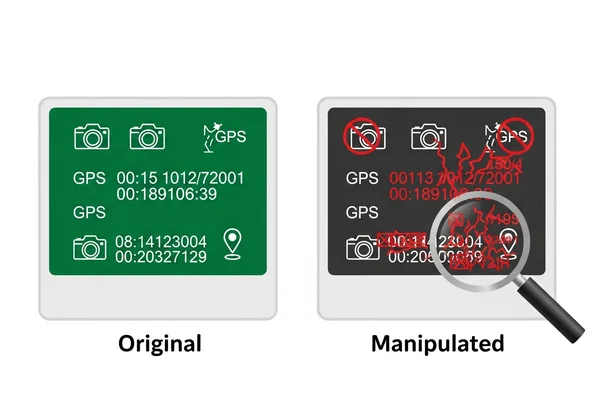
In the age of social media and easy-to-use editing apps, faking a photo has never been easier. People may edit images to create false alibis, incite public anger, or spread disinformation. Photo metadata forensics is one of the most effective ways to detect this kind of manipulation.
When a photo is edited with software like Adobe Photoshop, the program often overwrites or adds to the original EXIF data. An analyst might find that the Software tag indicates an editor was used, or that the ModifyDate is different from the DateTimeOriginal. These inconsistencies are strong indicators that the image is not in its original state. Authenticating digital evidence is a key part of any modern investigation.
Essential Techniques for Photo Metadata Forensic Analysis
Having access to EXIF data is only the first step. A forensic analyst must use proven techniques to interpret that data correctly and ensure its integrity. This requires a systematic approach, a deep understanding of how metadata works, and the right tools for the job.
Verifying Camera Authenticity and Image Integrity
A primary task in photo metadata forensics is to confirm that an image is what it claims to be. This involves two key questions: Was this photo taken with the device in question? And has the photo been altered since it was taken?
Analysts look for consistency. Does the image resolution match the camera model's capabilities? Are the compression characteristics consistent with an original file from that device? Some cameras embed a unique serial number in the EXIF data, which can be a definitive link. Any sign of re-compression or missing data fields could point to tampering. A secure and private tool is essential for this initial check, and our online EXIF viewer offers a safe way to perform this analysis.
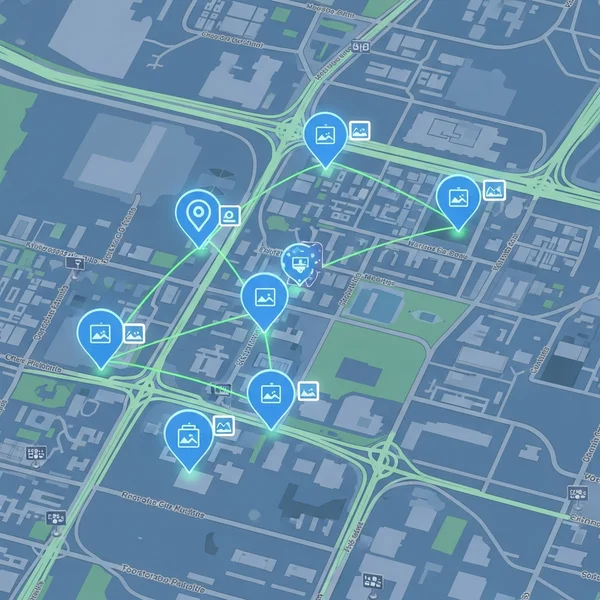
Extracting and Mapping GPS Coordinates from Crime Scene Photos
When a photo contains GPS data, extracting and using it effectively is a critical skill. The metadata provides raw latitude and longitude values. These must then be converted into a physical address or plotted on a map.
This process allows investigators to visualize the location and its surroundings. They can use tools like Google Maps or specialized GIS software to see exactly where the photographer was standing. This can help reconstruct a crime scene, identify potential escape routes, or discover nearby surveillance cameras that may have captured additional evidence. The accuracy of modern smartphone GPS makes this one of the most reliable forensic techniques available.
Identifying Signs of Edited or Altered Metadata
Just as the image itself can be manipulated, so can its metadata. A sophisticated criminal might try to scrub location data or change a timestamp to create a false alibi. Therefore, analysts must also look for signs of metadata tampering.
This is often a game of spotting what’s missing. For example, if a photo has basic EXIF tags but is missing the detailed MakerNote data specific to that camera brand, it's a sign the data may have been stripped and partially rewritten. Another clue is a mismatch in timestamps within the file system and the EXIF data itself. Detecting these subtle deceptions requires a tool that can display all metadata fields, including the more obscure ones.
Your Next Steps in Leveraging Photo Metadata for Investigations
Photo metadata is a silent witness in a digital world. From establishing timelines and locations to detecting digital forgeries, EXIF forensics provides investigators with powerful tools to uncover the truth. The key is knowing what to look for and having a reliable, secure method for analysis.
Understanding the digital footprint left by every photo is no longer just for tech experts; it's a fundamental part of modern investigative work. By carefully examining GPS data, timestamps, and device information, you can unlock a story hidden within the image file. The most important step is ensuring the integrity of your evidence by using a tool that respects its privacy and security.
Ready to uncover what your photos reveal? Our secure browser-based tool at EXIFData.org analyzes your metadata without ever uploading your images—giving you instant forensic insights.
Frequently Asked Questions About EXIF Data in Forensics
Can EXIF data be used as evidence in court?
Yes, EXIF data is frequently admitted as digital evidence in court proceedings around the world. However, its admissibility depends on proper handling and authentication. The chain of custody must be maintained, and an expert witness may be required to explain the data's significance and verify that it has not been tampered with.
How reliable is GPS data from smartphone photos for location verification?
GPS data from modern smartphones is generally very reliable, often accurate to within a few meters. However, its accuracy can be affected by factors like tall buildings, dense tree cover, or being indoors. Forensic analysts must consider these factors and look for corroborating evidence when using GPS data to establish a precise location.
What are the limitations of using metadata for photo authentication?
While powerful, metadata is not foolproof. A skilled individual can alter or completely remove EXIF data. Therefore, analysts should never rely on metadata alone. It should be used in conjunction with other forensic techniques, such as pixel analysis and error level analysis (ELA), to build a comprehensive case for a photo's authenticity.
How can I detect if someone has manipulated the EXIF data in a photo?
Detecting manipulated EXIF data involves looking for inconsistencies. This could be a mismatch between the photo's creation date and modification date, the presence of editing software tags, or the absence of specific MakerNote data. Using a comprehensive tool like the one on EXIFData.org allows you to see all available data fields, making it easier to spot these red flags.